← All work
Real-time broadcast · CBS News & Stations

One weather studio, six newsrooms

A master Unreal Engine 5 weather framework and visual standard, deployed across six US markets.

Client
CBS News & Stations
Role
Art direction, visual system design and real-time design. Led development from the first concept to the nationwide rollout
Rollout
New York, Chicago, Los Angeles, San Francisco, Philadelphia, Dallas
Tools
Unreal Engine 5, Pixotope, Zero Density, Niagara, VDB
Overview

From a mountaintop observatory into the studio

The weather studio is an observatory on a ridge, glass all the way round. The forecast is not a graphic on a wall but a place: the sky, the light and the precipitation outside the windows are the weather itself.

6US markets on one framework
1master UE5 architecture
0dropped frames, as the performance target on every station’s hardware
The challenge

Standardise it nationwide

One master weather framework had to be visually complex, with volumetric clouds and heavy precipitation, and still light enough to deploy fast and run reliably for different broadcast teams, without an Unreal engineer on site.

Process

Concept first, in AI. Then built for real

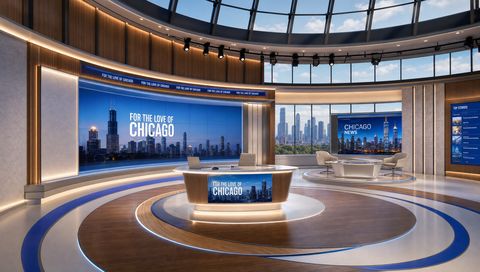
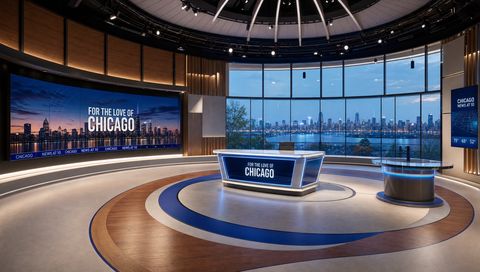
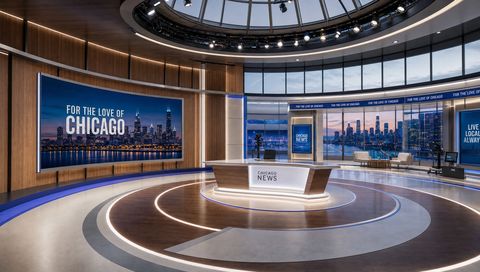
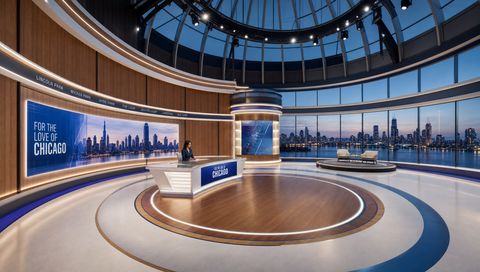
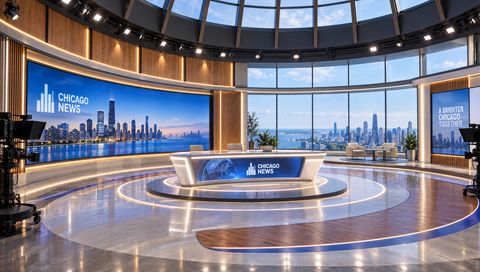
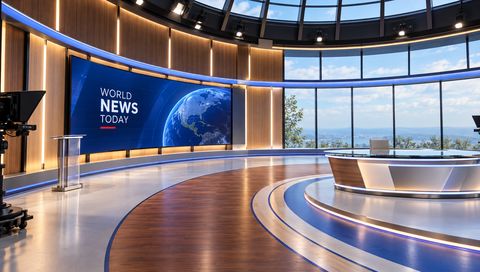
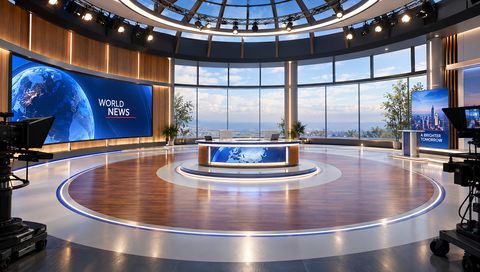
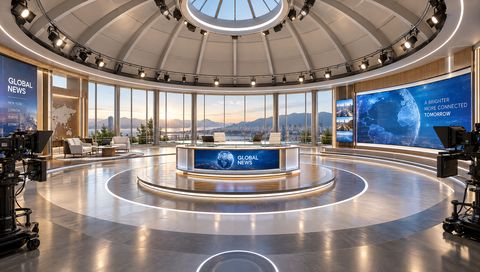
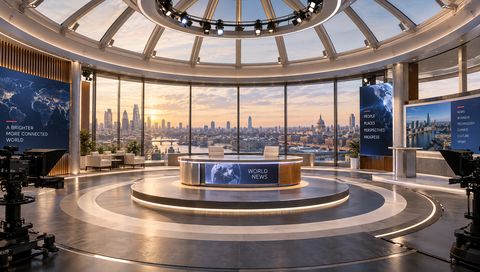
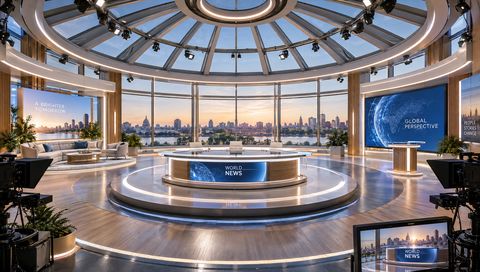
Before the level existed, the room was designed as images. A written brief went to GPT Image 2, which produced twelve variations of light, material and city outside the glass, reviewed together as a set.

CBS does not allow AI in the final product, so it was used only to explore ideas. One variation became the pre-concept and the final frame was drawn from it by hand. It fixed the proportions, the material family and the light, and went into Unreal as the reference every later decision was checked against. Everything on air was then built by hand: blockout, materials, sky, weather states.

Concept · AI
Production · Unreal Engine 5
01Prompt

A written brief of the room and its light

02Generate

Twelve variations of light, material and city

03Pre-concept

One frame becomes the pre-concept, then the final

04Blockout

The level built to match the frame

05Look

Materials, sky and lighting in engine

06Weather

Niagara and VDB states driven by data

07On air

Tablet control, six markets

Prompt

Use the provided existing observatory studio screenshot as the primary architectural reference, keep the room, vary the light, the materials and the city outside…

GPT Image 2

prompt ●● images
modelGPT Image 2 · 2.5 Sunburst
variations12
size1920×1088
seedrandomize

Preview Image · 12 variations
01
02
03
04
05
06
07
08
09
10
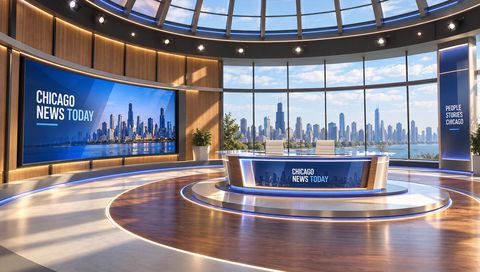
11
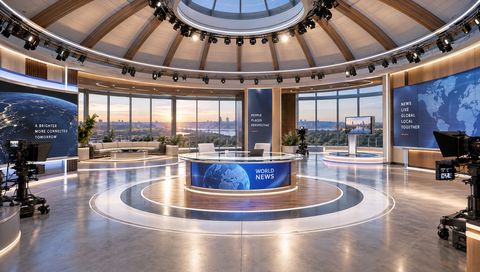
12
Same room, twelve readings of light and material

Select Image · art direction

123456789101112
Fixes proportions, material family and light

Save Image · pre_concept
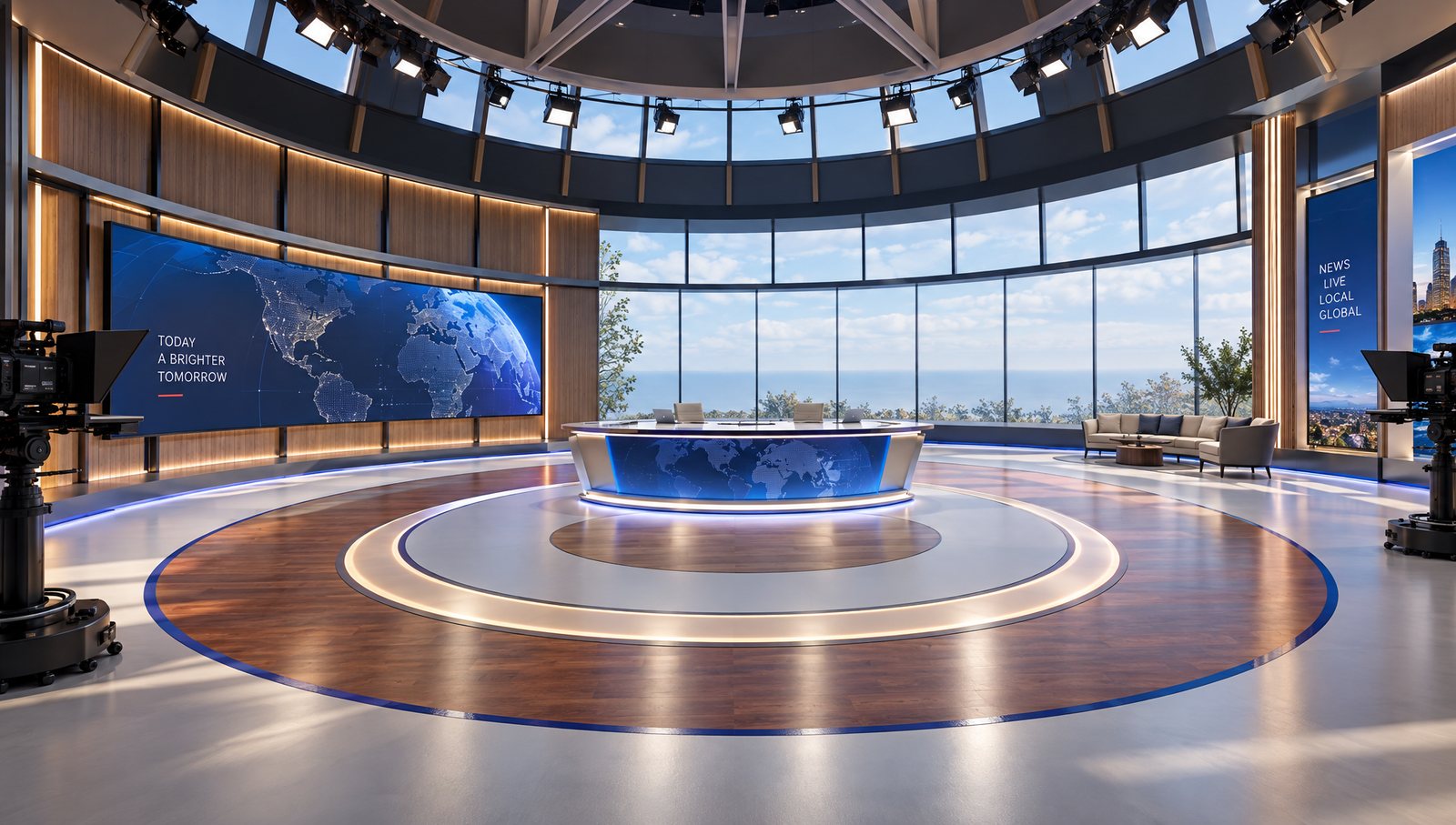
Pre-concept

Save Image · final_concept
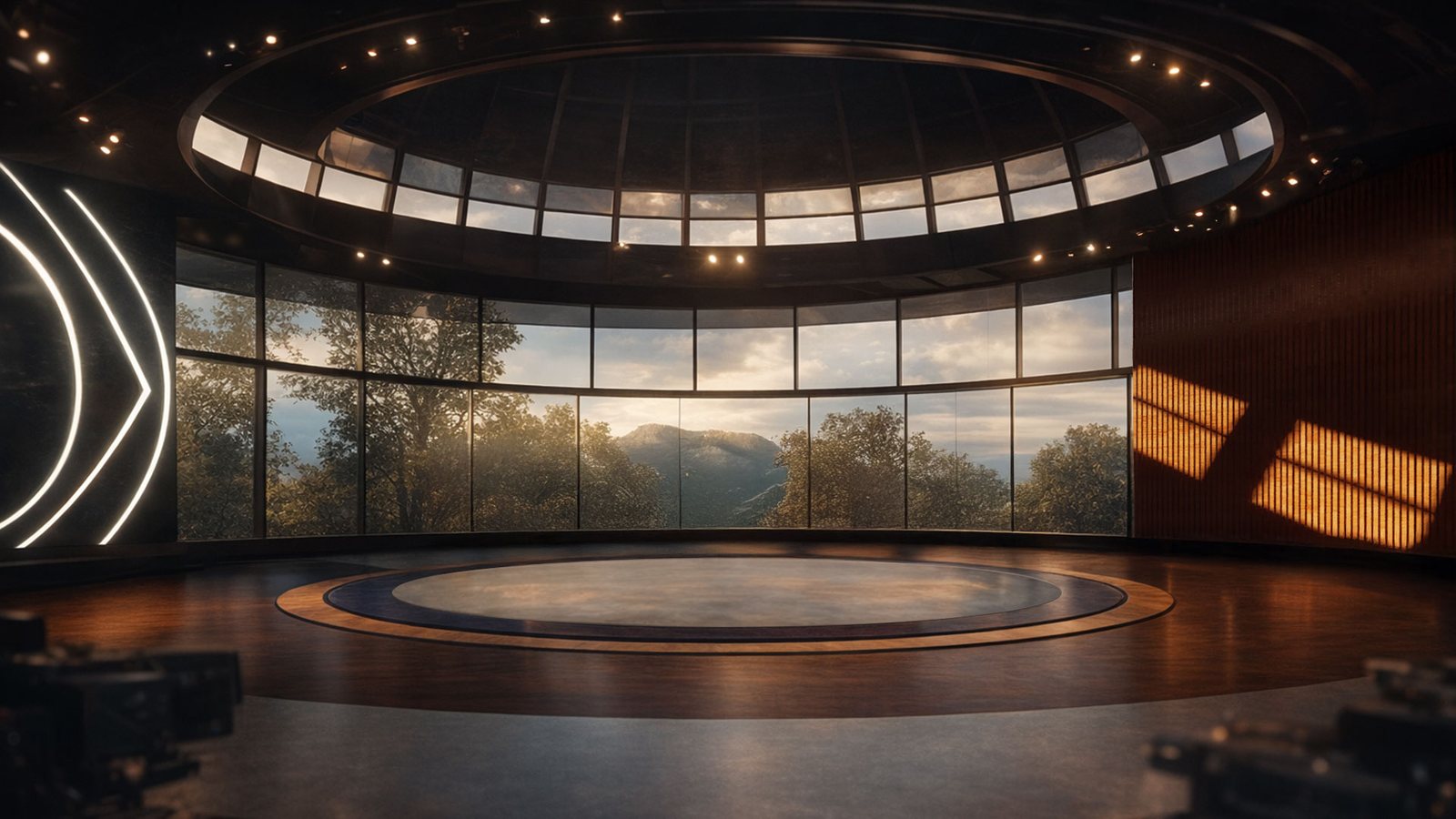
The final concept
The frame that went to development

To Unreal Engine 5

Blockout → materials → sky → weather states
The place

A room you can believe in

Before any data, the room has to hold on its own: one material family of warm wood, dark glass and a circular floor, lit by the sky outside.

Build

Built in Unreal Engine 5, shot as one fly-through

The ridge, the observatory and the studio inside live in one level. One camera move takes the viewer from the landscape, through the glass, into the room.

Master framework

One modular UE5 architecture, adopted by stations in New York, Los Angeles, Chicago, San Francisco, Philadelphia and Dallas.

Optimised at scale

VDB and Niagara systems for rain, snow and dynamic lighting states, profiled for steady performance on each station’s hardware.

Data-driven

Blueprint hooks tie live weather APIs to Niagara parameters, so a meteorologist triggers a complex state from a simple control panel.

Weather states

One sky, every state

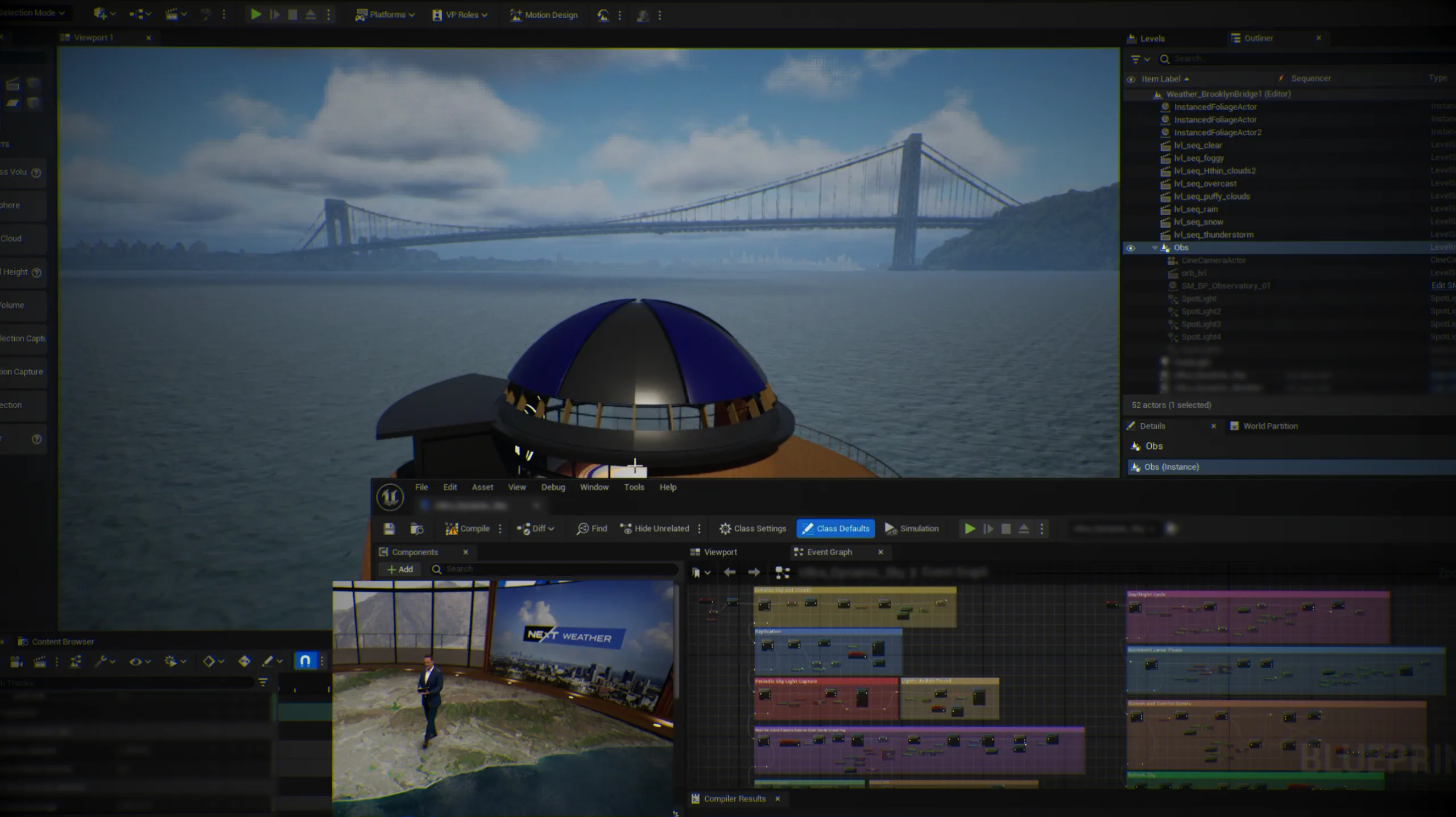
Clear, thin and puffy cloud, overcast, fog, rain, snow and thunderstorm are each a level sequence over the same set. Ultra Dynamic Sky runs the clouds, the sun and the moon, and a Blueprint ties them to the incoming data.

Level states cycling over the same set, in the Unreal editor
The level states, the sequencer and the sky Blueprint
The dome and the New York horizon
Floor and walls

The studio is also the graphic

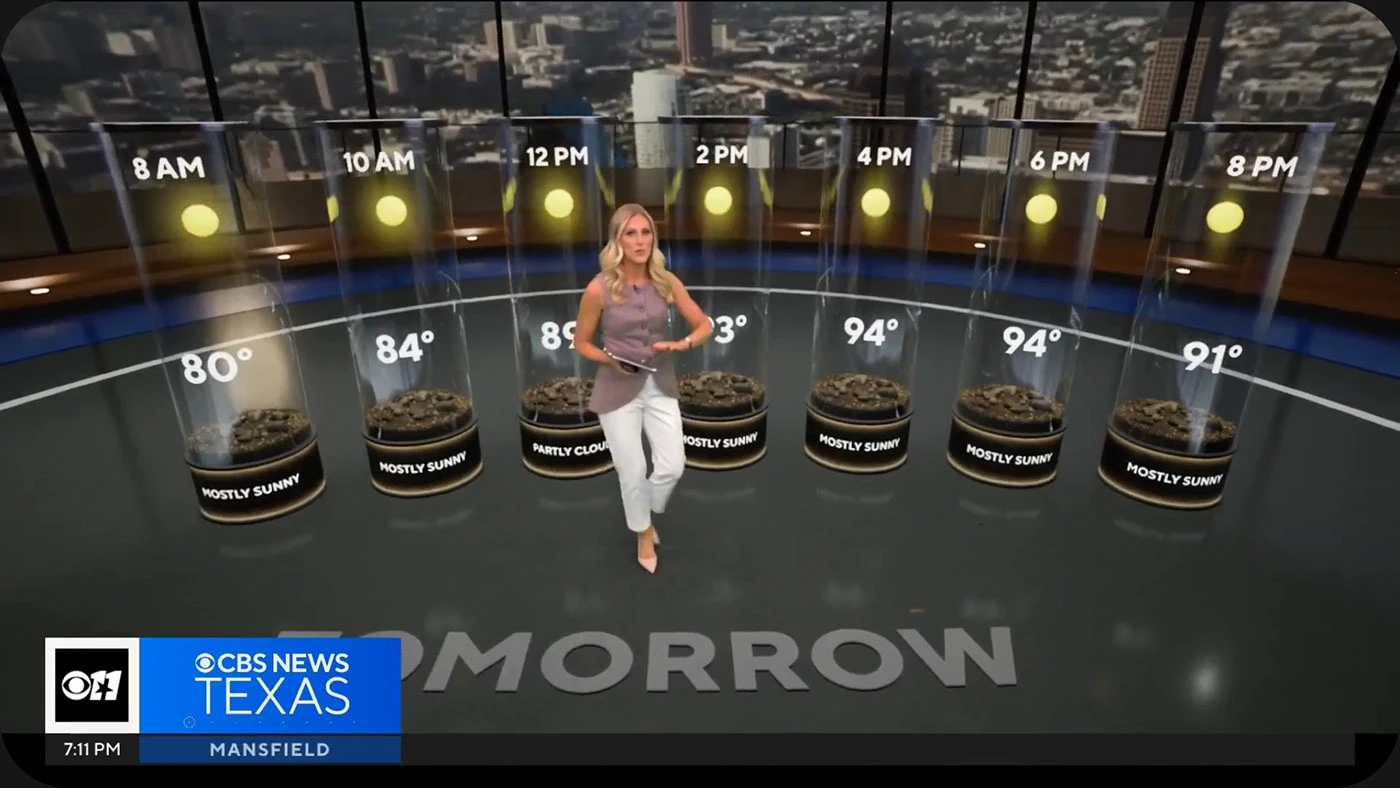
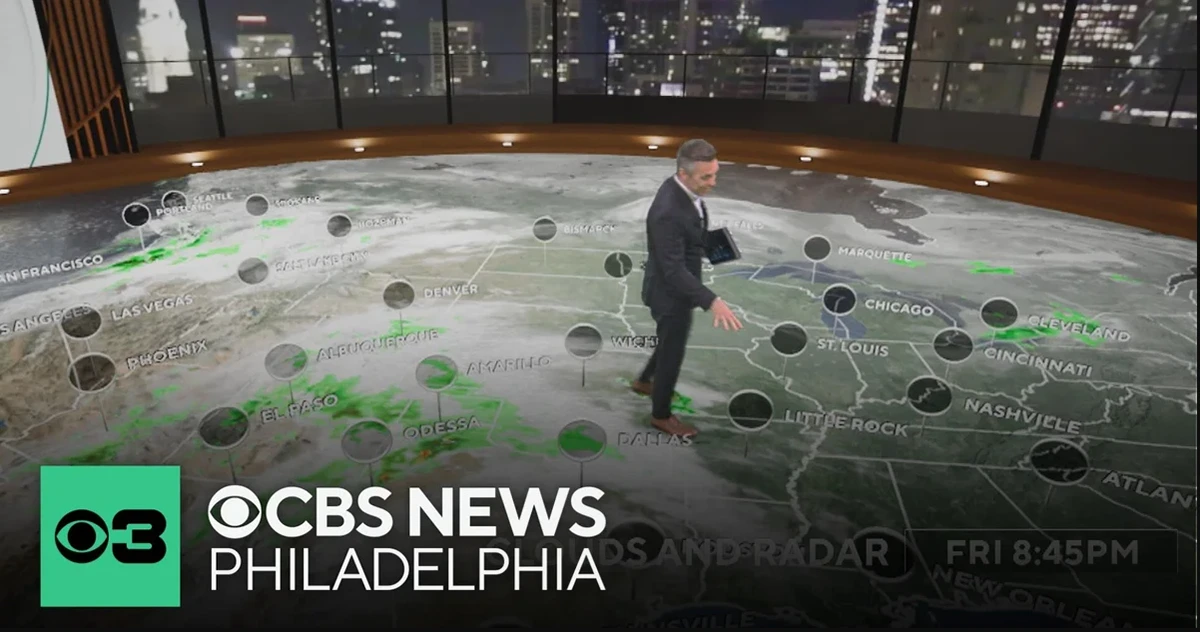
Maps, forecasts and photographs are drawn on the floor and across the curved glass instead of on a screen beside the host, so the presenter walks across the data.

Temperature map across the floor
Terrain of the basin as the floor
Futurecast clouds over the map
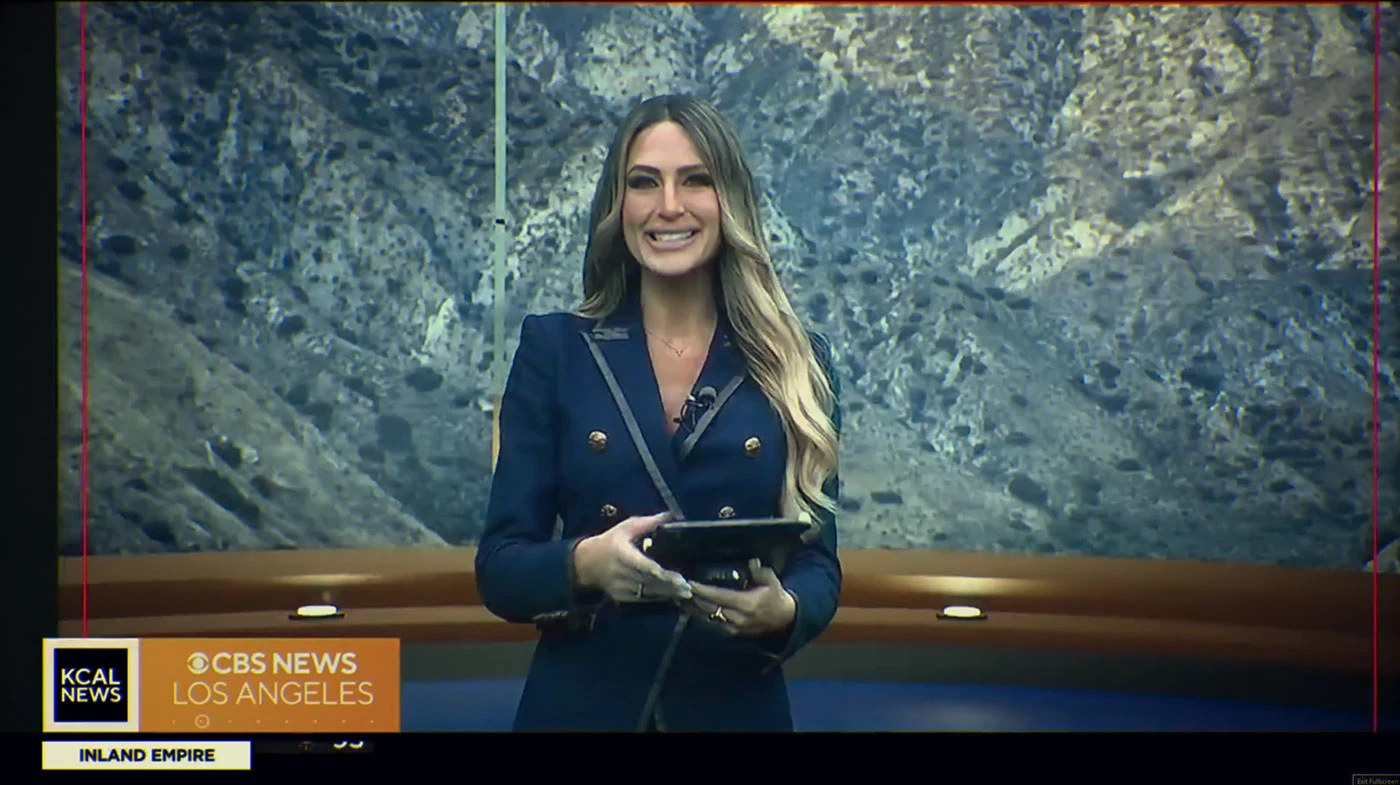
Los Angeles · a host in front of the glass
Forecast panels on the curved wall
Hollywood backdrop, the map on the floor
Control

Run from a tablet, not from an engineer’s chair

On set the hosts carry a tablet and trigger the states themselves, while the control room and a green-screen volume run the rest.

The meteorologist and the control tablet
The control tablet in hand, the studio on its screen
The virtual set on the monitors, the green volume behind
The meteorologist at the workstation, the studio on the monitors
The green volume and the camera crane
Satellite state on the studio floor
On air

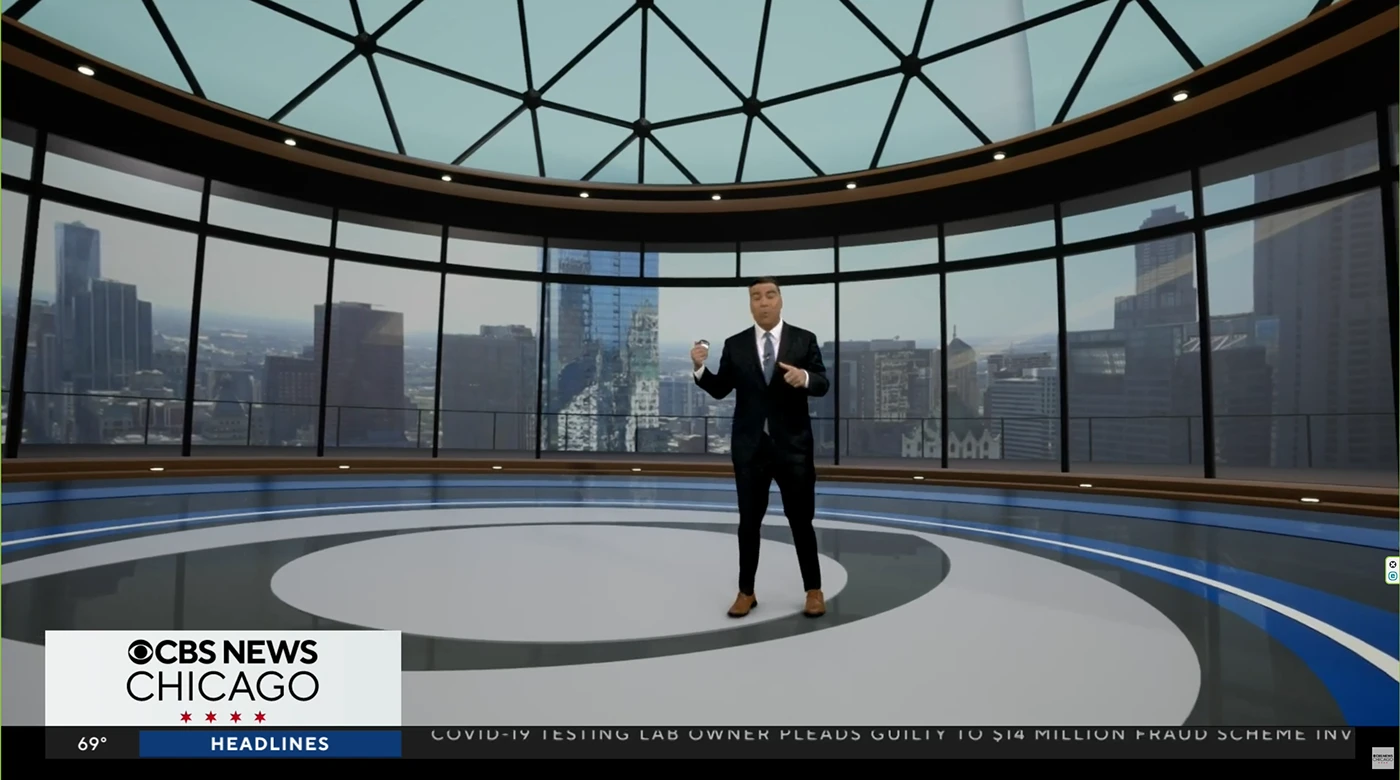
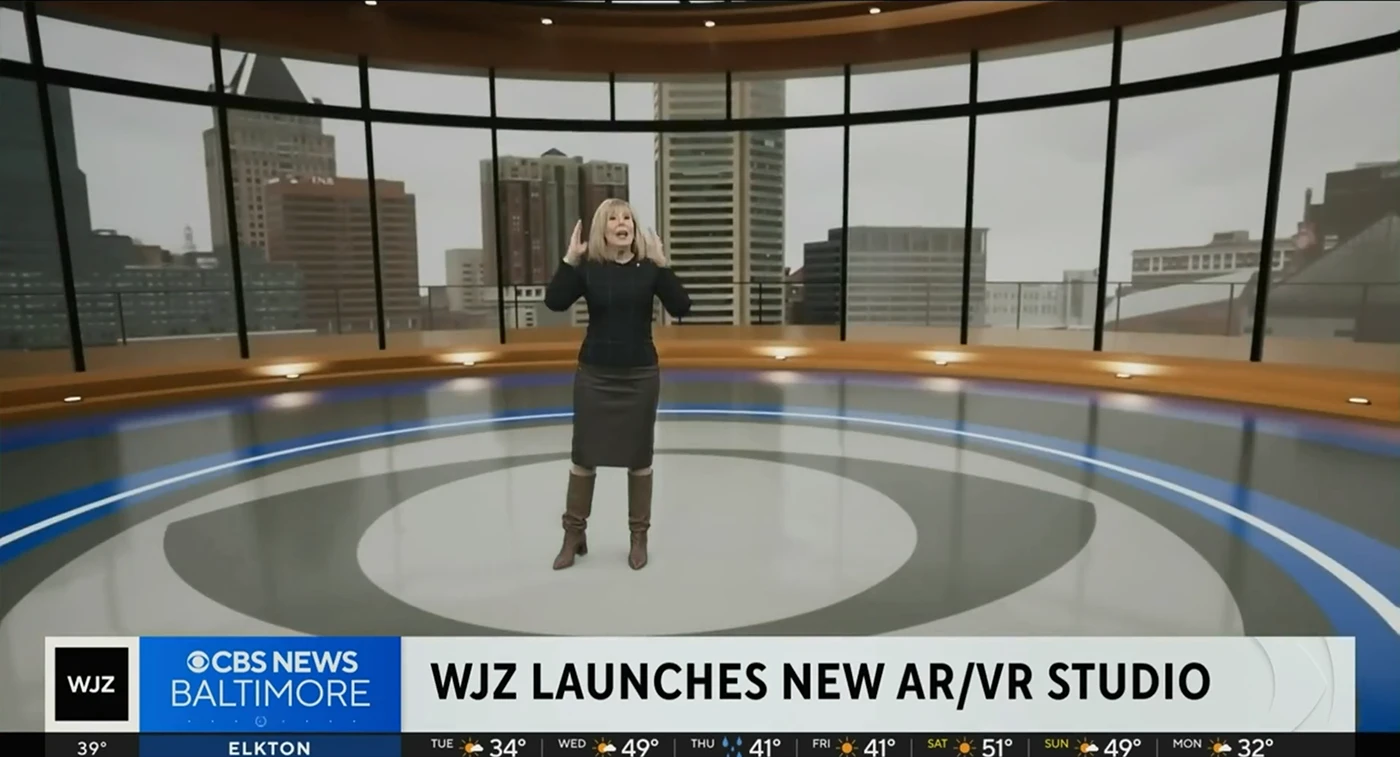
The same framework, in each market

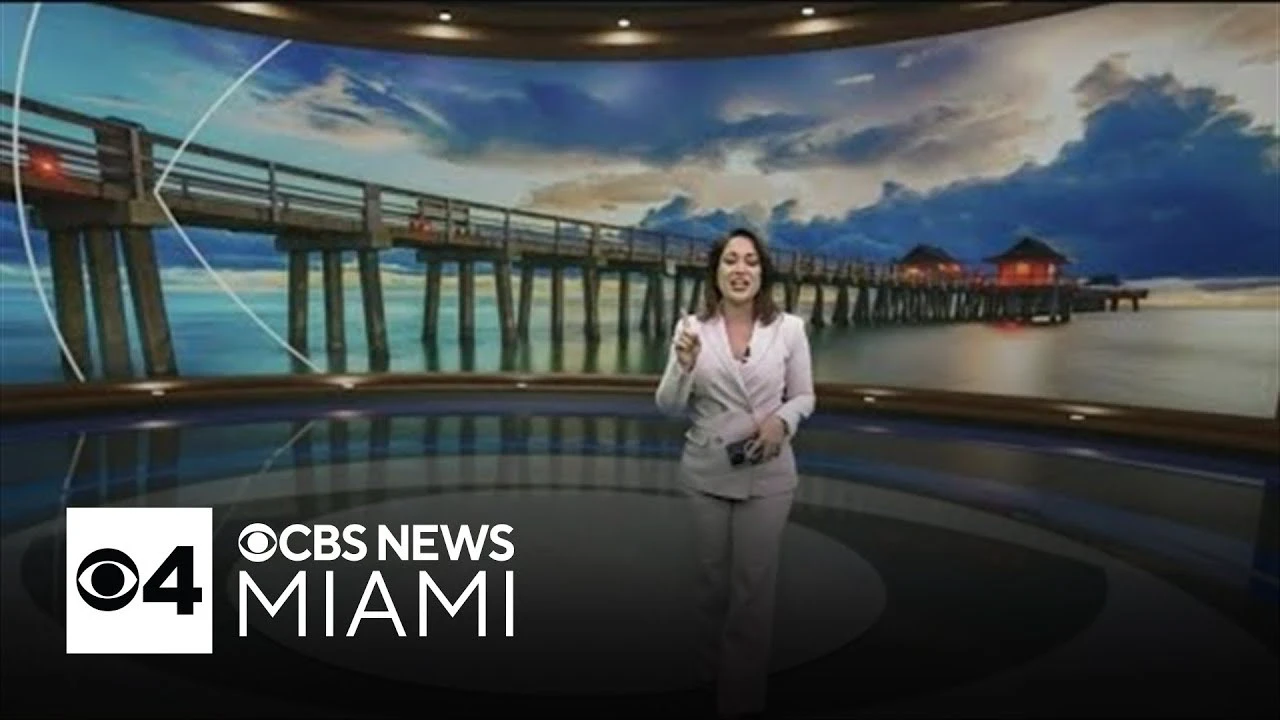
Each station dresses the studio for its own city and runs the same system underneath.

CBS National Weather AR/VR Framework · still 7
CBS National Weather AR/VR Framework · still 8
CBS National Weather AR/VR Framework · still 9
CBS National Weather AR/VR Framework · still 10
CBS National Weather AR/VR Framework · still 11
CBS National Weather AR/VR Framework · still 12
Result

The new broadcast standard

The framework standardised the visual quality of weather across the CBS network and cut the R&D cost of each regional deployment.

New YorkChicagoLos AngelesSan FranciscoPhiladelphiaDallas